Side Notes: Third Edition

Side Notes: Third Edition
Dear readers,
it’s the third edition of Side Notes—which means fresh reading material for you today!
You may have experienced something like this before: the piece of paper (or screen) in front of you is still blank because you just cannot put your thoughts down in writing. What can you do about that? Take a look at the “Tips from your Editor” section—maybe there is something useful in it for you!
Also, there is a new example for the use of the Chicago citation style. And I have updated my reading list for you with everything I have read or am still reading in March.
By the way, if you have missed any of the previous Side Notes, you can find them all here on my website.
Warm regards,
Teresa Johnson
—
Teresa Johnson, Ph.D. 姜心悦
German (native), English, Chinese
Lektorat Johnson
Services: Editing, Proofreading, Translation
Specialization: Academic Writing, Nonfiction
Tips from your Editor
As if facing a wall
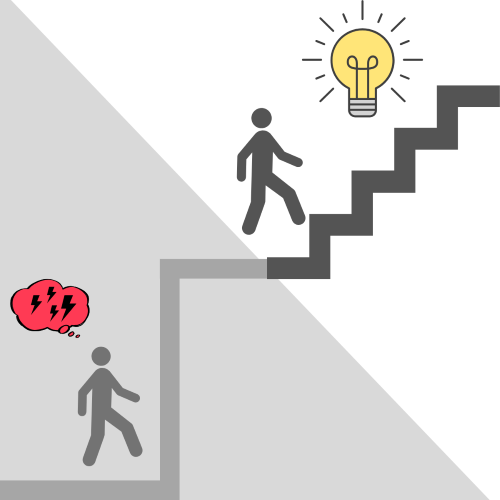
Your text project is due soon and you are wondering how to turn the white piece of paper in front of you into twenty pages of text? Or fifty? Or even two hundred? The idea of having to turn a blank page into a polished piece of writing can easily overwhelm and paralyze us. I know this feeling all too well myself. It is almost as if you were facing a big wall. The longer you stare onto the blank page, the more difficult it is to get started with writing.
No wonder, though!! Think about this: A lot needs to happen to create any amount of text. Perhaps it might be useful for you to adjust your approach to writing. Instead of jumping from zero to one hundred pages, perhaps you could take it step by step:
What are some interim steps you can implement to facilitate the goal of the final text version? How can you break down any hurdles or blockages in your mind that make it difficult to get your writing done? When you are on the ground floor and want to go to the first floor, you don’t just jump up in the air. No—you take the stairs (or the elevator) to reach your destination!
Now here are a few examples of smaller interim goals (your stairs) that are easier to reach than the big overall goal:
- Set a small writing goal for each day! For example a rough outline, one paragraph, or the analysis of one single source.
- Free yourself from the expectation that every sentence must be perfect as soon as you write it down. It is better to have a sentence on paper that still needs to be edited than to have no sentence at all because you let your own perfectionism beat you.
- On days when your previously set goal seems to big, simply scale it down until you feel confident that you can reach the new goal. Sometime that means that you will start by writing one single sentence. Maybe you add a second one. Perhaps even a third. Most likely, you will be able to accomplish more than you thought you would going into it.
Of course this is not a comprehensive list, but hopefully it serves you as an impulse to approach your writing differently.
Asian Studies
Correct citations are an important part of academic writing. Commonly used in Asian Studies and Chinese Studies in particular is the citation format according to The Chicago Manual of Style, in short: Chicago. For this reason, I would like to show you various examples of how to cite common source types with this citation style.
Citations with the Chicago style: articles or chapters (in an edited volume)
In the footnotes:
1. Daniel Youd, “Beyond Bao: Moral Ambiguity and the Law in Late Imperial Chinese Narrative Literature,” in Writing and Law in Late Imperial China: Crime, Conflict, and Judgment, edited by Robert E. Hegel and Katherine Carlitz (University of Washington Press, 2007), 220.
2. Jiayi Chen, “Ghostly Dicing: Gambling Games and Deception in Ming-Qing Short Stories,” in Games and Play in Chinese and Sinophone Cultures, edited by Li Guo, Douglas Eyman, and Hongmei Sun (University of Washington Press, 2024), 140.
Shortened footnotes (for repeated citations):
3. Youd, “Beyond Bao,” 221.
4. Chen, “Ghostly Dicing,” 142.
In the bibliography (sorted alphabetically):
Chen, Jiayi. “Ghostly Dicing: Gambling Games and Deception in Ming-Qing Short Stories.” In Games and Play in Chinese and Sinophone Cultures, edited by Li Guo, Douglas Eyman, and Hongmei Sun. University of Washington Press, 2024.
Youd, Daniel. “Beyond Bao: Moral Ambiguity and the Law in Late Imperial Chinese
Narrative Literature.” In Writing and Law in Late Imperial China: Crime, Conflict, and Judgment, edited by Robert E. Hegel and Katherine Carlitz. University of Washington Press, 2007.
*In the bibliography of an academic paper each entry would be visually distinguished from the others by means of a hanging line.*
How not to write…
The following examples are taken from various media that I encounter in my every day life at work and at home, in German and in English. These examples illustrate that there are many texts (and spoken words) out there that could have benefited from professional editing before they were published. I am not trying to expose anyone. Therefore, I only name the general genre or medium, not the person or the exact source who published these examples.
(Unfortunate) real world examples:
- CRIME NOVEL: Er hoffte, dass dieser Überfall auf Mary keine bleibenden Schäden bei der Frau des Verwalters hinterlassen würde. [Mary = Frau des Verwalters]
- INTERVIEW: Sie bestritt zunächst das Turnier und später die Behauptung der Medien, dass sie im Vorfeld nicht genug trainiert hatte. [zeugma]
- IMAGE CAPTIONS IN A NEWS ARTICLE: A man holds incense sticks during the chinese lunar new year’s eve celebrations at Boen San Bio temple. [capitalization]
What I’m reading in March
Academic Works
- “The Dynamics of Chinese Buddhism in the Ming and Qing: Social Network Analysis Based on a Combined Dataset,” by Mariia Lepneva, Journal of the European Association of Chinese Studies, Vol. 6.2 (2025)
- “Translation and Chinese Culture in Video Games” (2024), by Douglas Eyman, in Games and Play in Chinese and Sinophone Cultures, edited by Li Guo, Douglas Eyman, and Hongmei Sun.
Recreational Reading
- Gebrauchsanweisung fürs Zugreisen (2021), by Jaroslav Rudiš. The title roughly translates to “How to travel by train.” The author’s passion for travel by train is evident from the first lines of the book. A calm read that feels like an invitation to virtually travel across Europe alongside the author.
- Ikigai: Die japanische Lebenskunst (2023), by Ken Mogi (English title: The Little Book of Ikigai). Entertaining nonfiction book on the topic of the meaning of life and being content. Examples are taken from the lived realities of Japanese men and women to help the reader understand their various approaches to and interpretations of the concept of ikigai.
- Hiroshige (2022), by Adele Schlombs. Fantastic illustrated book on the ukiyo-e woodblock prints by Japanese artist Hiroshige (1797-1858). The prints shown and discussed here are located, among others, in the Chazen Museum of Art at the University of Wisconsin-Madison.
∗This list of texts is not formatted according to the Chicago style.∗
Upcoming
March 2026
Training
Continuous learning and education is indispensable for editors to be able to provide state of the art services. I am looking forward to my next training with the ADM academy for German media at the end of March. More about that in the next newsletter!
If you have questions or would like to share your feedback about the newsletter, please reach out to me at info@lektorat-johnson.de!
If you would like to stay in touch, feel free to connect with me via LinkedIn!
Interested in my editing services?
How about a trial edit?
If you would like to get to know my style of working as an editor, a trial edit is the way to go. I will edit your text for exactly one hour. Afterwards, I return the edited text to you and we discuss my feedback for you in a phone or video call.